
Gemstone Guide
Amethyst

Citrine
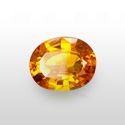
Diamond
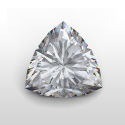
Emerald

Garnet
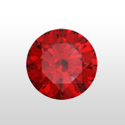
Peridot
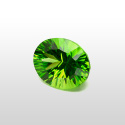
Ruby

Sapphire
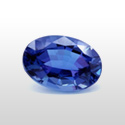
Topaz
Turquoise

Amethyst
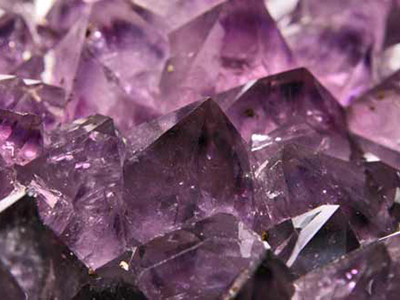
(Semi-Precious Stone)
Beloved for its rich purple
color and association with the ancient Greek god, Bacchus, the god of
wine, amethyst is a beautiful and regal looking stone.
Derivations/Origins:
A
member of the quartz family, the amethyst was mostly found in Russia
until deposits were uncovered in South America around the turn of the
twentieth century. Legends swirl around the amethyst that it keeps its
wearers clear-headed and quick-witted both on the battlefield and in the
boardroom.
Color/Style/Uniqueness:
Purple is generally
a color associated with royalty. Ranging from a pale lilac to a rich
wine color, the amethyst is nothing if not regal in appearance. There is
a version of the stone found in Africa that is royal purple with
reddish overtones that some experts consider to be the gem's finest
example.
Birthstone Info/Rock type:
Amethyst | February
Amethyst | member of the quartz family
Size/Budget:
The amethyst may be found in a good range of sizes, thus fitting many different budgets.
Care:
Warm, soapy water is a safe way to clean amethyst.
Steam cleaning isn't recommended.
Ultrasonic cleaning is usually considered safe.
Final Application:
For
those seeking a regal looking stone that will catch eyes, the amethyst
is a sure pick. It makes beautiful necklaces, earrings, rings and
bracelets.
Citrine
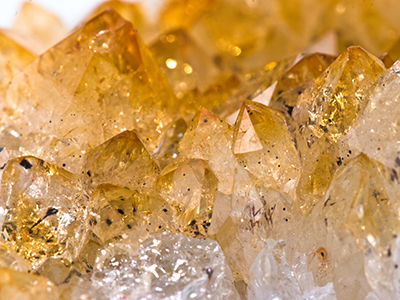
(Semi-Precious Stone)
Customers looking for a
stone with warm color, winning looks, great wearability and a moderate
price will want to consider citrine.
Derivations/Origins:
A
member of the quartz family, citrine's color reflects its Latin name
meaning \"citron\" — a fruit closely related to the lemon. Citrine is
generally mined in Brazil.
Color/Style/Uniqueness:
Ranging
in color from yellowish to brownish-red and sometimes orange this stone
looks beautiful on its own or paired with stones of complementary
colors such as amethyst, aquamarine or blue topaz. In addition to the
common round and fancier shapes you'll often see in the jewelry counter,
citrine can also be found in more unusual cuts or carvings thus making
it a good choice for a unique and personal piece.
Birthstone Info/Rock type:
Citrine | November (topaz is other)
Citrine | member of the quartz family
Size/Budget:
Citrine
is one stone that is readily available in a wide variety of sizes;
large and small, and thus fits a wide variety of budgets as well.
Care:
Warm, soapy water is a safe way to clean citrine.
Steam cleaning isn't recommended.
Ultrasonic cleaning is usually considered safe.
Final Application:
Citrine is a good choice for those working within a budget seeking a unique, classy and warm-colored stone.
Diamond
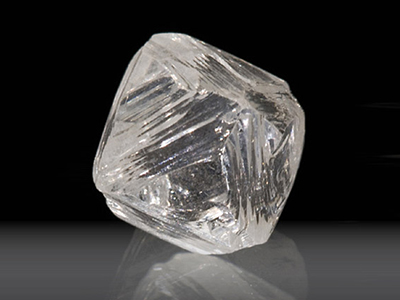
(Precious Stone)
Though often thought of as a
colorless stone, a truly colorless diamond is a rarity. Usually diamonds
have a light yellow tint, sometimes brown.
Derivations/Origins:
Said to symbolize clarity and strength, the diamond is named for the
Greek word, "adamastos" meaning "invincible". It is the hardest gem you
can buy. Often used as a symbol of romantic love, diamonds are also worn
as a sign of status and wealth.
Color/Style/Uniqueness:
Unique in that it's the only gem comprised of a single element �
carbon. The diamond has other trace elements but 99.95% of its makeup is
carbon. The trace elements can affect its shape and color.
Birthstone Info/Rock type:
Diamond | April
Size/Budget:
The cost of a diamond is dependent upon many factors including the 4 Cs: color, clarity, cut and carat weight
Care:
Warm, mild soapy water is a safe way to clean diamonds.
Ultrasonic cleaning is usually safe for diamonds unless it is a fracture-filled stone in which case it could harm the filling.
Steam cleaning is usually safe for diamonds.
Final Application:
Often a symbol of romantic love, the diamond is also worn to display
status and wealth. Formed underground in precise conditions, the diamond
is a rare and precious gift that is celebrated around the globe.
Emerald

(Precious Stone)
A true, deep green color, the emerald is a striking stone alleged to give its wearer a quicker wit and a higher IQ.
Derivations/Origins:
Originally
mined in Egypt and now more frequently in Colombia, the emerald name
comes from the Greek word "smaragdus" meaning green. Cleopatra fancied
the emerald and often wore it.
Color/Style/Uniqueness:
A
deep green, these rare gems are often carved into a rectangular step
cut, which is known as the emerald cut. You can find smaller stones
carved into other shapes such as round, oval or marquise. Emeralds
usually have inclusions. Unlike diamonds, inclusions do not detract from
the emerald's value.
Birthstone Info/Rock type:
Emerald | May
Emerald | the stone celebrating the 55th and 20th (modern) wedding anniversaries
Emerald | member of the beryl family
Size/Budget:
The emerald is rare; thus stones under five carats are generally more expensive than some other gems of comparative sizes.
Care:
Warm, soapy water is a safe way to clean emerald. Do not scrub too hard.
Never steam clean emerald.
Never use ultrasonic cleaning on emerald.
Final Application:
For those appreciating a striking and less common gemstone, the emerald makes its mark.
Garnet
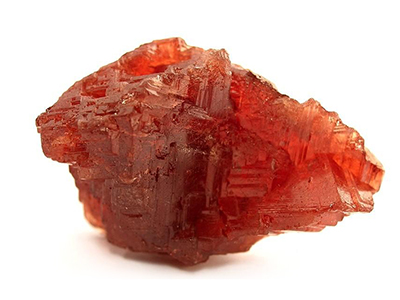
(Semi-Precious Stone)
There are many different
species of stones within the garnet family. Almandite, demantoid,
hessonite, malaya, pyrope, rhodolite, spessartite and tsavorite are all
stones in the garnet family tree.
Derivations/Origins:
Almandite:
Almandite gets its name from an ancient Asian hotbed of gemstone and
fashion trading: the town of Alabanda. This red stone was said to have
lit the course, attached to the bow of Noah's ark after he recognized
its "inner fire" as a superior light source.
Demantoid:
Discovered in the Russian Ural Mountains in 1868, this garnet was
marketed by Tiffany and Company as an attractive alternative to the
emerald.
Hessonite: A close relative of the tsavorite garnet, the hessonite originally came from Sri Lanka.
Malaya:
Discovered in 1960s East Africa, the malaya garnet was born of a
chemical mixture of the two garnets, pyrope and spessartite. Its peppy
and bright colors created a small and strong US market in the 1980s.
Pyrope: Greeks and Romans valued the pyrope while the Greek word pyropos
means "fiery-eyed" which perfectly describes the lavish red color of
this garnet. This was also a popular stone among Victorian era jewelry.
Rhodolite: The two Greek words that impart the name of this garnet: rhodon ("rose") and lithos ("stone") speak to its beautiful color.
Spessartite: Spessart, Germany was once a prominent source for this gem and hence became its namesake.
Tsavorite: Discovered in Kenya in the 1970s, Tiffany and Company made this gem a popular seller in the US market.
Color/Style/Uniqueness:
The most familiar member of the garnet family is almandite, bearing a
red or reddish-purple to orangey hue. Demantoid is a garnet with a green
to yellowish-green color. It also carries inclusions known as "horse
tails"; wispy and fiber-like, they branch out from a central point.
Often called "cinnamon stone", hessonite has warm, brownish hues
including oranges, yellows and reds. The malaya garnet projects the
perky colors of light to dark pinks, reds and yellowish-orange. The
pyrope garnet is typically a brilliant red but also comes in medium to
dark reddish-orange or purplish-red. Actually a mixture of almandite and
pyrope, rhodolite is known for its dark purplish-red or reddish-purple
color. Spessartite is a different looking garnet usually found in a
bright orange to dark yellowish or reddish-orange color. Tsavorite is
usually an explosive green or yellowish-green stone, intense in its
color.
Birthstone Info/Rock type:
Garnet (all varieties) | January
Size/Budget:
Almandite: Almandite is one of the most common and best-selling garnets.
Demantoid:
Rare, the high-quality demantoid has been difficult to find and thus is
a more expensive stone. Supplies in Namibia have recently been
uncovered leading to an increase in its availability.
Hessonite:
Less popular than spessartite, hessonite can sometimes be difficult to
find. Hessonite stones over one carat can be on the expensive side.
Malaya:
Typically available in a variety of fancy shapes up to ten carats, the
malaya is on the high-end when it comes to expensive garnets.
Pyrope: Pyrope is rarely seen in sizes larger than two carats due to its limited availability. This makes it a more expensive gem.
Rhodolite: This garnet is widely available in many sizes and is a best-seller next to almandite.
Spessartite:
You should generally be able to locate a round or fancy shape of this
gem up to ten carats. Its vibrant orange color will sometimes lead to
higher prices than garnets of a more common reddish hue.
Tsavorite:
Few known sources of this garnet equal limited supplies leading to a
more expensive gem. This stone is generally found in a smaller size,
typically maxing out at three carats.
Care:
Warm,
soapy water is a safe way to clean garnets of all varieties. See below
for other cleaning methods best for your specific garnet type.
Almandite Care:
Ultrasonic cleaning is usually safe on almandite.
Never steam clean almandite.
Demantoid Care:
Ultrasonic cleaning is usually safe on demantoid unless there are liquid inclusions which would make it risky.
Never steam clean demantoid.
Hessonite Care:
Ultrasonic cleaning is usually safe on hessonite unless there are liquid inclusions which would make it risky.
Never steam clean hessonite.
Malaya Care:
Ultrasonic cleaning is usually safe on malaya.
Never steam clean malaya.
Pyrope Care:
Ultrasonic cleaning is usually safe on pyrope.
Steam cleaning pyrope is risky.
Rhodolite Care:
Ultrasonic cleaning is usually safe on rhodolite.
Never steam clean rhodolite.
Spessartite Care:
Ultrasonic cleaning is usually safe on spessartite unless there are
large or numerous inclusions or fractures which would make it risky.
Never steam clean spessartite.
Tsavorite Care:
Ultrasonic cleaning is usually safe on tsavorite unless there are liquid inclusions which would make it risky.
Never steam clean tsavorite.
Final Application:
Garnets have been used as beads and inlays. They can be found in round
or fancy shapes. Collectors and admirers alike appreciate their
applications in antique Victorian era jewelry. The garnet is quite the
chameleon of a stone.
Peridot

(Semi-Precious Stone)
Hailed as the "gem of the
sun" by ancient Egyptians, the peridot is a transparent stone found in a
range of colors including browns, yellows and greens.
Derivations/Origins:
In
years past, the peridot has been alleged to repel evil spirits and
protect its wearer from "terrors of the night". Peridot's most
commercially important producer is located in Arizona at the San Carlos
Indian Reservation. Most peridots are pushed from deep underground to
the surface of the earth by the force of volcanoes.
Color/Style/Uniqueness:
From
a lime or olive green to a brown or yellow shade, peridots bring the
warmth of light wherever they go. You will often see this gem combined
with others of a contrasting color, like amethyst, citrine or pink
tourmaline, creating beautiful arrangements.
Birthstone Info/Rock type:
Peridot | August (sardonyx is other)
Peridot | member of the olivine family
Size/Budget:
These
stones are plentiful and thus fairly inexpensive. You should easily be
able to find standard shapes and sizes up to about five carats. Stones
beyond the five-carat mark can also be found relatively easily.
Care:
Warm, soapy water is a safe way to clean peridot.
Never steam clean peridot.
Ultrasonic cleaning is considered risky for peridot.
Final Application:
Peridots that are tumbled and faceted are often used in bracelets and bead necklaces.
Ruby

(Precious Stone)
Though also found in hues of
pink, purple and orange, ruby's most desirable and valuable color is
that of the richest and purest of red.
Derivations/Origins:
Nicknamed
"King of the Gems" in Sanskrit, some believed the red ruby made its
wearers invincible when engaged in battle and able to live in harmony
with their enemies. Rubies that are considered to be the highest and
finest quality often come from Myanmar (formerly Burma).
Color/Style/Uniqueness:
Pure red is ruby's most sought after color though you will also find it in lighter shades of pink, purple or an orangey red.
Birthstone Info/Rock type:
Ruby | July
Ruby | Member of the corundum family
Size/Budget:
Most
who want a ruby will be able to find one, however very large,
fine-quality rubies are very difficult to find and thus very valuable
and more expensive.
Care:
Warm, soapy water is a safe
way to clean ruby as long as strong detergents are avoided and you do
not scrub too hard on oiled stones.
Steam cleaning is only safe for rubies that are not fracture-filled or cavity-filled stones.
Never steam clean if your ruby is fracture or cavity-filled.
Ultrasonic cleaning is only safe for rubies that are not fracture-filled or cavity-filled stones.
Never utilize ultrasonic cleaning if your ruby is fracture or cavity-filled.
Final Application:
Often
found in mixed-cut oval shapes or cabochons (a stone that's polished
instead of faceted and will usually sit flat on its bottom with a convex
top) this tough gem — only diamond is harder — is an excellent choice
for rings.
Sapphire

(Precious Stone)
A gem long-associated with
romance and royal leanings, Princess Di received a blue sapphire
engagement ring from Prince Charles back in 1981.
Derivations/Origins:
Ancient
Greek royalty claimed the sapphire was a protector from envy and harm.
In the Middle Ages clergy could often be found sporting sapphires to
symbolize Heaven. Keeping one's chastity intact, instilling peace among
enemies and influencing spirits were all alleged powers of the sapphire.
Color/Style/Uniqueness:
Despite a common
misconception, not all sapphires are blue. Green, violet-blue, yellow,
orange, pink and purple hued stones are known as "fancy" sapphires and
range from very light to very dark in saturation. There is even
something known as a "parti-colored sapphire" which exhibits multiple
colors within one stone, sometimes changing color depending on the
light. Blue is the more widely available color. Sapphires and rubies are
both members of the corundum rock family. Any corundum disqualified to
be a ruby then becomes known as a sapphire.
Birthstone Info/Rock type:
Sapphire | September
Sapphire | Member of the corundum family
Size/Budget:
Most
who want a sapphire will be able to find one, however very large,
fine-quality sapphires are rare and valuable thus more expensive.
Care:
Warm,
soapy water is a safe way to clean sapphire as long as strong
detergents are avoided and you do not scrub too hard on oiled stones.
Steam cleaning is only safe for sapphires that are not fracture-filled or cavity-filled stones.
Never steam clean if your sapphire is fracture or cavity-filled.
Ultrasonic cleaning is only safe for sapphires that are not fracture-filled or cavity-filled stones.
Never utilize ultrasonic cleaning if your sapphire is fracture or cavity-filled.
Final Application:
When
transparent, the sapphire is usually faceted. When translucent or
opaque, a sapphire will often be cut into a cabochon (a stone that's
polished instead of faceted and will usually sit flat on its bottom with
a convex top) and also used for beads.
Topaz

(Semi-Precious Stone)
Named for the (now called
Zabargad) old Greek island Topazios, topaz was never actually found on
that island — peridot was. Before modern mineralogy was around periodot
and topaz were often confused.
Derivations/Origins:
The
ancient Greeks believed strength was bestowed upon the wearer of topaz.
During the Renaissance period some thought topaz could drive away anger
and free them from the curse of a magic spell.
Color/Style/Uniqueness:
The
range of colors topaz comes in is surprising for many people. Color
saturations also vary from light to dark. Colorless topaz also exists.
Many think of topaz as brown, which is one option. Topaz also comes in
blue, green, yellow, orange, red, pink and purple. One of the most
expensive colors of topaz that can be bought is known as imperial topaz.
It's a medium reddish-orange to orange-red in color.
Birthstone Info/Rock type:
Topaz | November (the other is citrine)
Size/Budget:
Blue
topaz has wide availability as does sherry topaz — a yellowish-brown to
brownish-yellow to orange in color. Topaz that is scarcer and thus more
expensive would be the imperial, reds, purples and pinks.
Care:
Warm, soapy water is a safe way to clean topaz.
Never steam clean topaz.
Never utilize ultrasonic cleaning on topaz.
Final Application:
Sizes
will differ depending on the color of the stone. Blue and sherry topaz
produce stones of the largest carat size. Standard faceted shapes apply
to most colors of topaz. Topaz should be treated with a bit of care
because it can develop cleavage thus making it more fragile.
Turquoise

(Semi-Precious Stone)
One of the most ancient
stones out there, turquoise has been around for thousands of years. It
is associated with bestowing its wearer with good fortune, good health
and protection from evil.
Derivations/Origins:
The
name "Turquoise" has a French origin. From the expression, "pierre
tourques" which means "Turkish stone," turquoise probably originated in
Europe from Turkish sources.
Color/Style/Uniqueness:
Turquoise's
saturation can go from translucent to opaque. Its color normally ranges
from light or medium blue to a greenish-blue. The stone will often have
splotches of varying shades within it. It could also contain veins of
what's known as matrix throughout. A matrix is the "host rock" in which
it is found.
Birthstone Info/Rock type:
Turquoise | December (the other is zircon)
Size/Budget:
Turquoise
is a plentiful stone that can be found in a wide variety of sizes, thus
fitting many budgets. The most valuable turquoise will be free of
matrix traces. It will be an even, medium blue and it will take a good
polish.
Care:
Warm, soapy water is a safe way to clean turquoise.
Never steam clean turquoise.
Never utilize ultrasonic cleaning on turquoise.
Final Application:
Turquoise
is a versatile stone. It can be used in carvings and inlays. It is also
found in bracelets and necklaces in bead form. Rings, earrings,
cabochons (a stone that's polished instead of faceted and will usually
sit flat on its bottom with a convex top) are other uses.